Document Type : Original Research
Authors
1 Faculty of Dentistry, Shahed University, Tehran, Iran
2 Department of Oral and Maxillofacial Pathology, Faculty of Dentistry, Shahed University
3 Department of Periodontics, Faculty of Dentistry, Shahed University
Highlights
✅The mean number of micronuclei in buccal mucosa cells of waterpipe smokers was significantly higher than non-smokers. The genotoxicity effect of waterpipe was dose-dependent.
Keywords
For many centuries, waterpipe is used for tobacco smoking in Asia and Africa. Traditionally, most waterpipe users are concentrated in North Africa and South-east Asia (1). Nowadays, waterpipe smoking is a global problem. Based on published data numbers of waterpipe users are increasing among women and teenagers. Waterpipe smoking delivers high levels of nicotine to mucosal cells of oral cavity and respiratory tract. The inhaled nicotine contains toxic materials comprising carbon monoxide and carcinogenic materials (2). The risk of carcinomatous changes intensifies by waterpipe smoke (3-4).
Waterpipe smokers inhale higher doses of nicotine compared to a cigarette smoker. Inhalation a chemical agents such as nicotine causes genetic damages. Revealing the genetic damage in persons who are at risk on being exposed to toxic materials is a practical tool in evaluating the genotoxicity effect of agents and malignant transformation. Bio-monitoring of individuals exposed to genotoxic agents using exfoliated buccal mucosa cells is a simple and a reliable method for determining the genotoxic effect. For the first time, Stich et al. used the micronucleus test on exfoliated buccal mucosa cells for tracing the genotoxic exposure in humans (5). Micronucleus test is an inexpensive and non-invasive method for screening the persons who are at risk of cancer development (6). Micronucleus is a separated part of nucleus originates during cellular division. Micronuclei generate from chromosomal fragments of inter-phasic cells (7). The micronuclei are cytoplasmic structures measuring between 1/5 to 1/3 size of nucleus with staining similar to nucleus (8). In general populations, the mean prevalence of cells with micronuclei is 0 to 0.9%. Any increase in micronucleus count is a reflection of chromosomal alterations. The number of micronuclei has been related to degree of carcinogenic effect (9).
In a study which was among the first investigations about the effect of waterpipe smoking on cytogenetic changes, El-Setouhy et al. showed a higher level of micronuclei in waterpipe smokers of rural Egypt population (10). In Iran, the popularity of waterpipe smoking is growing. This is an important issue for persons who are concerned about health planning programs. Despite increasing tendency of youths and women for using the waterpipe, knowledge about the genotoxcicity of waterpipe is insufficient. The aim was to evaluate the genotoxic effects of waterpipe smoking by testing the micronucleus count of buccal mucosa cells in a cytologic study.
This was a case control with simple sampling method. The study was carried out in the department of Pathology, Faculty of Dentistry, Shahed University, Tehran, Iran in Oct 2015-Apr 2016. The study was approved by ethical committee of Shahed University and registered as IR.Shahed.Rec.1394.301.
Using Cochran`s sample size formula with 95% confidence level and 90% strength of test, the sample size was determined as 27.89 subjects in both smokers and non-smokers’ groups. A total 60 subjects (30 waterpipe smokers and 30 non-waterpipe and cigarette smokers) were entered the study. All subjects in both case and control groups were 20 to 50 year old males. The persons younger than 20 years old, suffering of systemic disease and any oral lesions, consuming any type of drugs and being exposed to dental radiography beam in recent 6 months and alcohol consumers were excluded from the study in both case and control groups. Waterpipe smokers were selected from a local waterpipe café in Tehran, Iran. Non-smokers were collected from dental school of Shahed University. All subjects were living in Tehran and were not farmer or worker in Arsenic industries.
The inclusion criteria for selecting the waterpipe users were using the waterpipe at least once in a week. To reduce the effect of cigarette smoking on the results, the protocol of El-Setouhy et al. was used to select the samples. Accordingly, persons who never smoked cigarettes or smoke utmost 100 cigarettes in their whole life were included the study (10). Time duration of waterpipe smoking was registered based on number of smokings per year (11).
An inform consent was taken from all subjects before participation in the study. The demographic information were entered in a registration form and coded. The participants were not identified by names and families.
For collecting the buccal mucosa cells, all subjects rinsed their mouth twice with normal salin. Using wooden spatula, the exfoliated buccal cells were scrapped and were spread on to the glass slides. Samples were fixed in Carnoy's fixative (methanol and glacial acetic acid in a ratio of 3:1) for 30-35 minutes and then dried at room temperature. The modified method of Thomas et al. was used for staining the micronuclei by Feulgen reaction (12). The Feulgen reaction was performed as follows: Slides were dipped in 1 N HCL at 60 for 10 minutes, rinsed in the distilled water for 3 minutes, placed in Schiff's reagent for 90 minutes and then in normal salin for 10 minutes. Then, slides were placed in 0.5 % sodium metabisulfite solution for 3 times and then rinsed with tap water. Then the slides were stained with 1% light green for 15 minutes, were rinsed with tap water and finally dried and mounted.
The structures within cytoplasm with similar staining of nucleus measuring between 1/5 to1/3 size of nucleus was considered as micronucleus (8). The cells presenting cell death features comprising of karyorrhexis, karyolysis and pyknosis were not included in the study (Figure 1).
The micronuclei count completed in form of blind. Cells with distinct cellular margin were encountered for counting. The overlapped cells and cellular collections were not considered. Optic microscope (ZEISS, Germany) under oil immersion lens with × 1000 magnifications was used for micronuclei count. The micronuclei count was demarcated by the number of counted micronuclei per 1000 cells per subject (10). Mean number of micronuclei were determined for all samples and were presented as mean±SD. The linear regression and T-test were employed at the P≤0.01 as the significant level. The statistical analyses were completed using SPSS 20 package (IBM Company, Chicago, IL, USA).
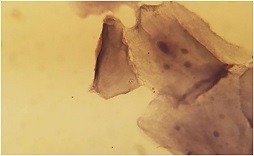
Fig. 1. Photomicrograph of a cell with 3 micronuclei (arrows) in buccal mucosa smear of waterpipe smoker (× 1000, Feulgen staining)
The average age of waterpipe smokers and non-smokers were 26.83±3.74 and 28±7.88 years, respectively. The range of waterpipe smoking duration was from 1 to 11 years with the mean duration of 3.3±2.24 years. The mean number of micronuclei in buccal mucosa of waterpipe smokers and non-smokers were 1.94±0.39 and 1.68±0.35, respectively. The count of micronuclei in buccal mucosa of waterpipe smokers and non-smokers were 25±1.83 and 8.78± 0.83, respectively (Table 1).
The T-test revealed that micronuclei count in waterpipe smokers was significantly higher than non-smokers (P=0). The difference between the number of waterpipe smoking and micronuclei count was significantly different (P=0) (Figure 2). The comparison of data on number of waterpipe smoking per year using regression analysis indicated that, the number of micronuclei count increased to 0.33 (P=0.35) by increasing the smoking time in each years of smoking. Each time waterpipe smoking was associated with an increase in micronucleus count up to 0.027 (P=0).
Table 1. The demographic characteristics and micronucleus assay of the waterpipe smokers (n=30) and non-smokers (n=30)
| Waterpipe | Smoker | Non | Smoker | Sig (two-tailed) T-test |
|
| Characteristics | Number | Mean± SD | Number | Mean± SD | |
| Age | |||||
| 20-30 31-40 41-50 |
25 5 0 |
25.5±2.3 33.2±15.2 0 |
23 5 2 |
23.7±2.7 37.1±3.37 44±1.4 |
P=0.46 |
| Time duration of smoking* 0-200 201-400 401-600 |
11 15 4 |
118±33.4 260±48.1 555±52.5 |
0 0 0 |
0 0 0 |
|
| MN**count per subject | |||||
| 0-10 | 1 | 8 | 12 | 7.5±1.31 | P=0 |
| 11-20 | 10 | 14.8±5.35 | 17 | 15.4±2.85 | |
| 21-30 | 10 | 25.5±3.95 | 1 | 21 | |
| 31-40 | 7 | 38±1.67 | 0 | 0 | |
| 41-50 | 2 | 41 | 0 | 0 | |
| Mean per subjectMN | |||||
| 0-1.5 | 5 | 1.35±0.08 | 13 | 1.37±0.10 | P=0 |
| 1.6-2 | 12 | 1.7±0.15 | 12 | 1.75±0.13 | |
| 2.1-2.5 | 10 | 2.19±0.14 | 5 | 2.28±0.20 | |
| 2.6-3 | 3 | 2.6±0.06 | 0 | 0 | |
* Number of smoking per year
**MN: Micronucleus
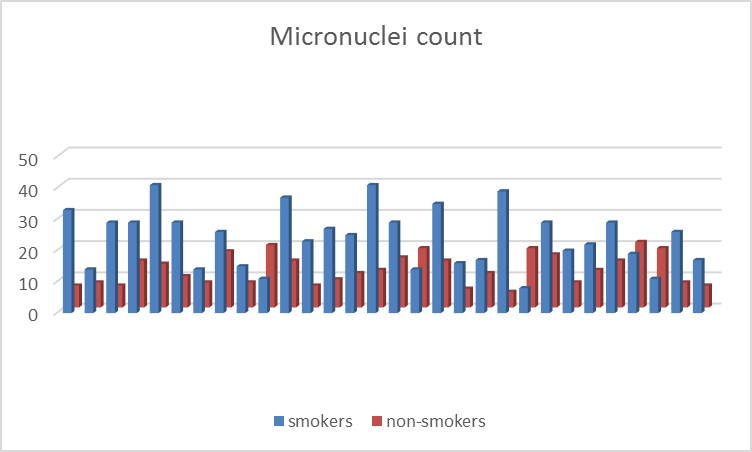
Fig. 2. The mean number of micronuclei count in waterpipe smokers and non-smokers
The study showed that the mean number of micronuclei in buccal mucosa cells of waterpipe smokers was significantly higher than non-smokers. The genotoxic effect of waterpipe on buccal cells and peripheral blood leukocytes have been demonstrated with comet assay (13), sister chromatid exchanges (SCEs) assay (14) and chromosome analyses (15). In present study, using a simpler method, the previous results were confirmed. Micronucleus assay is a reliable, simple and inexpensive biological test in demonstrating the genotoxic effect of agents. The results of present study showed that the micronuclei count of buccal mucosa cells in waterpipe smokers was higher than non-smokers. The finding is in consistent with El-Setouhy, et al. (10).
It has been reported that the micronuclei count in tobacco chewer and cigarette smokers were higher than general population. Based on reports, the count of micronuclei in smokers were 1-2 times more than non-smokers (16-20). Compatible with previous findings in cigarette smokers, the results showed that the mean count of micronuclei in waterpipe smokers is almost 1.5 fold more than persons who never smoked waterpipe.
The false believe about of waterpipe smoking being harmless in comparison to cigarette smoking derives from the method of waterpipe application; passing the smoke of burned tobacco through the water. Smoke of waterpipe contains toxic material such as carbon monoxide and heavy metals (2). The carbon monoxide in expired air of waterpipe and cigarette smoking are 23.7 ppm and 2.7 ppm, respectively. The carboxyhemoglobin level after waterpipe smoking is 3 times higher than cigarette (21).
The amount of produced toxin during one session of waterpipe smoking is equal to 10 cigarettes per day (22). The difference originates from different exposing time to smoke. The average time of cigarette and waterpipe smoking are 5-7 minutes and 45 minutes, respectively. A person inhales 0.5 -0.6 L smoke during cigarette smoking. This amount equals to 0.15 -1 L during waterpipe smoking (1,23).
The present study showed that by adding one year to waterpipe smoking history, the number of micronuclei count increased to 0.33. Each time waterpipe smoking was associated with an increase in micronucleus count up to 0.027. The results were compatible with this finding that the hazard of waterpipe smoking depends on amount and time of smoking (24).
Absence of an established protocol for measuring the dose and duration of waterpipe smoking is a problematic concern in studying the impact of waterpipe smoking on micronucleus assessment. Different staining method has been used in evaluating the micronucleus assessment. Application of the nonspecific DNA stains in demonstrating the micronuclei of epithelial cells leads to false-positive or false-negative results. It has been shown that the results of micronuclei evaluation in oral mucosa cells strongly relates to staining method (25). Omitting the effect of staining method on obtained results, we used the Feulgen stain. Feulgen technique is the most reliable method for staining the nuclear DNA and micronuclei evaluation in cytologic materials (26).
It has been reported that air pollution, exposing to agricultural pesticides and chronic occupational exposure to Arsenic are relating factors in producing the higher rates of micronuclei count in buccal mucosa and peripheral blood lymphocytes (10,27).
In present study, all samples were collected from a local waterpipe café in Tehran. All subjects were under the same condition regarding the inhalation of polluted air. The subjects were not farmer or worker in Arsenic industries. To achieve more reliable results and omit the possible effect of female hormones on findings, the study was completed on 20 to 50 year old males. The used sampling method and using specific DNA stain decreased any possible biases in achieved results.
The present study was limited on male waterpipe smokers. Study the genotoxic effects of waterpipe smoking in females and comparing the results with male users is intensely recommended. In most societies such as Iran, waterpipe smoking is a fun activity. Most waterpipe smokers are not cigarette smokers because they believe that cigarette smoking is more harmful than waterpipe smoking. Alternatively, some waterpipe users are heavy cigarette smokers. Because of this divergence, tissue sampling was very time consuming and difficult. To date, waterpipe smoking is a public health problem. Recent studies showed the increasing level of waterpipe smoking between youths and educated persons (28). Waterpipe smoking has adverse health effects similar to or even higher than cigarette smoking (29). Update socio-demographic researches on waterpipe smoking is an important necessity for managing the preventive efforts.
The waterpipe smoking had genotoxic effect on human buccal mucosa cells. The genotoxic effect of waterpipe was dose-dependent. Due to increasing interest of youths and women in waterpipe smoking, further researches were needed for studying the health effect of waterpipe smoking on different human cells and tissues in both genders and different age ranges.
The study was completed by financial support of Shahed University. The author thanks Dr. Mohammad Javad KharaziFard for statistical analyzing.
The authors declared no conflict of interest.

| Article View | 2,015 |
| PDF Download | 1,219 |

