Document Type : Original Research
Authors
1 Thromboses Hemostasis Research Center, Tehran University of Medical Sciences, Tehran, Iran
2 Pediatric Congenital Hematologic Disorders Research Center, Shahid Beheshti University of Medical Sciences, Tehran, Iran
3 Dept. of Pathology, School of Medicine, Imam Khomeini Hospital Complex, Tehran University of Medical Sciences, Tehran, Iran
Keywords
Introduction
Factor VIIa and tissue factor (TF) binding starts initiation of a coagulation cascadein circulating blood. The circulating blood normally contains around 4 ng/ml of activated FVII (FVIIa) (1). Impaired thrombin generation, fibrin hemostatic plug formation, lack of resistant to premature fibrinolysis, and defective hemostasis maintenance have been shown in diseases related insufficient amount of thrombin dependent on the TF-FVIIa. During recent 5 years the indications for use of rFVIIa have been approved in many coagulopathy diseases including hemophilia with inhibitors, acquired hemophilia, congenital factor VII deficiency, Glanzmann’s thrombasthenia, von Willebrand disease, immune thrombocytopenia, quantitative or qualitative platelet disorders to various uses in massive bleeding due to trauma and surgery (1-5). Range of 15-20 IU/dL of recombinant activated factor VII is reported as efficient haemostatic dose in clinical practice (6).
Recombinant activated FVII (rFVIIa; NovoSeven_, Novo Nordisk, Bagsværd, Denmark) was first licensed by the European Medicines Evaluation Agency for patients with auto- and allo-antibodies against FVIII and FIX.Ageneric version of FVIIa was developed by AryoGen (Tehran, Iran). Recombinant activated FVII; AryoSeven™ as a pro-hemostatic agent was first licensed by the Ministry of Health and Medical Education (Iran). Human FVII produced by biotechnology, cloned and expressed in Baby Hamster Kidney cells, secretes from the BHK cells in the single-chain form and converts into FVIIa during the purification procedure. Aryoseven induces homeostasis in hemophilia A and B patients with life threatening hemorrhage or major surgery indication, regardless of inhibitor titer. The complex of factor VIIa to tissue factor activates factor IX into factor IXa and factor X into factor Xa, leading to the initial conversion of small amounts of prothrombin into thrombin. Thrombin leads to the activation of platelets and factors V and VIII at the site of injury and to the formation of the haemostatic plug by converting fibrinogen into fibrin.
The frequencies of both serious and non- serious adverse drug reactions are reported as rare and un common undesirable effects of Aryoseven such as DIC, Arterial thromboembolic events, venous thromboembolic events, rash (including allergic dermatitis and rash erythematous), pruritus and urticaria, flushing, angioedema, nausea, headache, hypersensitivity, anaphylactic reaction, therapeutic response decreased, pyrexia and injection site reaction .
An appropriate cost-cutting effort which was done by AryoGen (Tehran- Iran) is contributing to economic interestin produce of a generic version of FVIIa. AryoSeven™ as a safe Iranian product has been available on our market and the most of hematologists have prescribed it since
2012, however; a little is known about its safety and efficacy. The aim of the current observational study was to assess safety of AryoSeven on 51 patients with coagolupathy disorder.
Materials and Methods
This was a prospective, observational, non-interventional, post-marketing surveillance study of rFVIIa in patients with CHwI to FVIII or FIX, acquired haemophilia, congenital FVII deficiency and Glanzmann’s thrombasthenia. By definition, this study did not need a control group and only the effects of drug were measured and no comparison was made.
All analyses were performed separately for each indication. This descriptive study was carried out in Thrombus and Homeostasis Research Center-ValiAsr Hospital during 2013-
2014. Fifty one patients with bleeding disorders referred to Hematology Clinic and received at least one dose of Aryoseven for the treatment or prevention of a bleeding episode were enrolled in this study.
Exclusion criteria were any thrombosis risk factor, malignancy, pregnancy, positive history of recent corticosteroids or coagulant drugs consumption. Patients’ demographic data including age, gender, weight, ethnicity, diagnosis-specific information, history of blood products administration prior to rFVIIa,
Aryoseven dosage and initiation time, adverse effect of drug and reaction related to Aryoseven or previous usage of Recombinant activated FVII were recorded in questionnaires.
After one week investigator-led study, data were analyzed separately for each indication. Variables are shown in means, standard deviations, medians, minimums and maximums and Mann-Whitney U test was used to compare side effects of Aryoseven and other recombinant activated FVII brands. P value< 0.05 was considered as significant level.
Our study was approved by the institutional review board of Tehran University of Medical Sciences according Helsinki declaration. Our gathered data were confidential and no extra cost was constrained on our participants. All patients gave written informed consent.
Results
Aryoseven (20-100 mg kg_1 every 4-8 h in a week) was prescribed for 51 Patients with bleeding disorders. Of all participants with mean age 57.18+21.38 yr, 31 cases (60.8%) were male and 26 subjects had past history of recombinant activated FVII usage (Novoseven and Faiba). Glanzman was the most frequent disorder by 18 cases (35.5%) followed by congenital FVII deficiency 13(25.5%), hemophilia with inhibitors 8 (15.7%), factor 5 deficiency 1(2%), acquired hemophilia 1(2%), hemophilia A with inhibitor 3(5.9%), and hemophilia A or B with inhibitor 7(13.7%). Demographic data is shown in Table 1.
The analysis consisted of data from 51 patients with bleeding complications who received Aryoseven as prevention or treatment (Table 2). The majority of bleeding episodes had occurred in joints 19(37.3%), followed by muscle bleeds
10(19.6%), oral cavity 6 (11.8%) and nose 3 (5.9%). Bleeding episodes were stopped or a significantly reduced in all cases.
Three patients (5.9%) complained about Aryoseven adverse effects including headache, GI problems, urticaria and itching that occurred immediately, 2 h or a week after drug administration. Side effect symptoms got improve by medical interventions in outdoor patient department. Of 26 patients with positive history of other brands consumption; 3 cases (11.5%) mentioned headache, itching and dizzinessexperience as related adverse effects. However frequencies shows more safety in Aryoseven group, there was no significant difference between 2 groups' (Aryoseven and other recombinant activated FVII brands) adverse effects (P value= .356) (Fig 1).
Table 1
Participant's demographic characteristics
|
Characteristics |
All |
G |
HI |
DFV |
DFVII |
AH |
HAI |
HA,BI |
|
Total Number of patient, [n (%)] |
51(100) |
18(35.3) |
8(15.7) |
1(2) |
13(25.5) |
1(2) |
3(5.9) |
7(13.7) |
|
Patient Age, Year |
|
|
|
|
|
|
|
|
|
Mean(SD) |
57.18(21.38) |
60.72(19.07) |
57.62(23.98) |
54 |
46.23(25.33) |
54 |
75(21.79) |
61.14(13.74) |
|
Min,Max |
4,94 |
15,90 |
21,90 |
54 |
4,94 |
54 |
50,90 |
38,80 |
|
Gender, [n (%)] |
|
|
|
|
|
|
|
|
|
Men |
31(60.8) |
5(27.8) |
8(100) |
0(0) |
7(53.8) |
1(100) |
3(100) |
7(100) |
|
Women |
20(39.2) |
13(72.2) |
0(0) |
1(100) |
6(46.2) |
0(0) |
0(0) |
0(0) |
|
Weight, Kg |
|
|
|
|
|
|
|
|
|
Mean(SD) |
57.16(21.4) |
53.39(19.0) |
48.12(35.2) |
85 |
58.69(17.1) |
70 |
54.33(14.2) |
69.86(13.70) |
|
Min,Max |
4,49 |
23,86 |
4,94 |
85 |
15,90 |
70 |
38,83 |
53,90 |
|
Use of Blood Product, [n(%)] |
3(5.9) |
3(16.7) |
0 |
0 |
0 |
0 |
0 |
7(100) |
G; Glanzmann, HI; Haemophilia with inhibitors, DFV; Deficiency of factor V, DFVII; Deficiency of factor VII, AH; Acquired Hemophilia A, HAI;
Hemophilia A with inhibitors, HA, BI; hemophilia A or B with inhibitors
Table 2:
Frequency of complaints and location of bleeding.
|
Charectristics |
All |
G |
HI |
DFV |
DFVII |
AH |
HAI |
HA,BI |
|
Total Number of Patient |
51 |
18 |
8 |
1 |
13 |
1 |
3 |
7 |
|
Indications: |
|
|
|
|
|
|
|
|
|
Bleeding,n(%) |
47(92.16) |
16(88.89) |
7(87.5) |
0(0) |
13(100) |
1(100) |
3(100) |
7(100) |
|
Prevention,n(%) |
4(7.84) |
2(11.11) |
1(12.5) |
1(100) |
0(0) |
0(0) |
0(0) |
0(0) |
|
Location of Bleeding |
|
|
|
|
|
|
|
|
|
Joint,n(%) |
19(37.3) |
6(33.3) |
2(25) |
0(0) |
5(38.5) |
0(0) |
2(66.7) |
4(57.1) |
|
Muscle,n(%) |
10(19.6) |
5(27.8) |
0(0) |
0(0) |
1(7.7) |
0(0) |
1(33.3) |
3(42.9) |
|
Nose,n(%) |
3(5.9) |
0(0) |
1(12.5) |
0(0) |
2(15.4) |
0(0) |
0(0) |
0(0) |
|
Oral,n(%) |
6(11.8) |
0(0) |
1(12.5) |
0(0) |
4(30.8) |
1(100) |
0(0) |
0(0) |
|
Gastric,n(%) |
1(2) |
1(5.6) |
0(0) |
0(0) |
0(0) |
0(0) |
0(0) |
0(0) |
|
Other,n(%) |
4(7.8) |
3(16.7) |
0(0) |
0(0) |
1(7.7) |
0(0) |
0(0) |
0(0) |
|
Multiple,n(%) |
4(7.8) |
1(5.6) |
3(37.5) |
0(0) |
0(0) |
0(0) |
0(0) |
0(0) |
G; Glanzmann, HI; Hemophilia with inhibitors, DFV; Deficiency of factor V, DFVII; Deficiency of factor VII, AH; Acquired Hemophilia A, HAI; Hemophilia A with inhibitors, HA, BI; hemophilia A or B with inhibitors
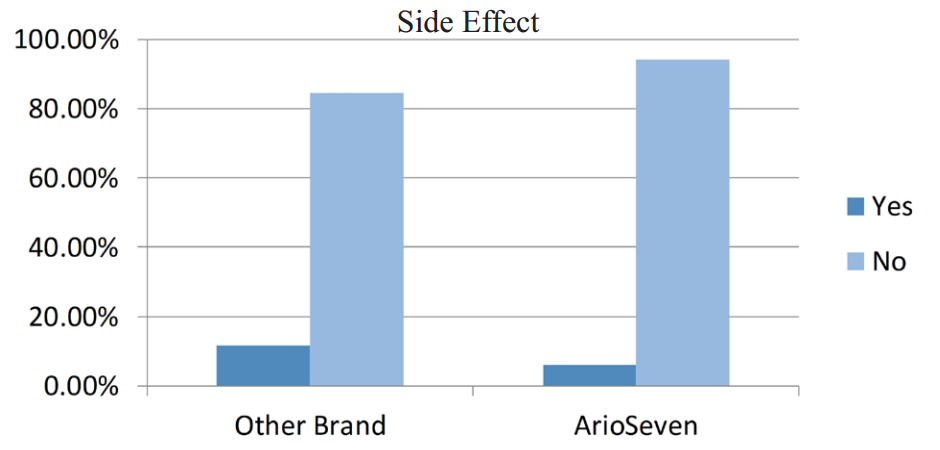
Fig. 1. Comparison of side effects in 2 groups (Aryoseven and other Recombinant activated FVII brands)
Discussion
Recombinant activated factor VII induces hemostasis in life threatening bleeding, prophylactic therapy to prevent bleeding episodes and for surgical prophylaxis in patients with coagulopathy disorders (4-9). People with bleeding disorders in countries with more clotting factor concentrates, have a longer life expectancy (10-13). Besides symptoms of bleeding disorders that influence on the quality of patient's life, the high cost of imported clotting factor products constrain a great burden on our patients and health system economy. Luckily AryoSeven™ as a safe Iranian product has been available on our market since 2012. AryoSevenTM has been introduced as safe and effective as branded activated human recombinant blood coagulation factor VII.
A fully characterized in molecular level, AryoSeven TM has been developed by Aryogen and third parties including regulatory and other third party laboratories. It has been proven to have imaginable similarity and therefore it is not distinguishable from branded drug in terms of most characteristics. Moreover, many clinical trials have been carried out showing no significant difference in baseline characteristics between two arms in any of the trials.
Due to increased usage of Aryoseven in Iran, we assessed its safety concerns. Based on our results Aryoseven therapy did not increas the incidence of serious adverse events like thromboembolic events statistically and patients can be treated safely. Man-Chiu pointed to serious morbidity and mortality as adverse events are due to prolonged continuous infusion or high Doses of rFVII conjunction with antifibrinolytic drugs (4).
The prevalence of thromboembolisem associated with rFVIIa and a thromboembolisem associated fatal event are reported less than 4/100 000 and extremely rare (10, 14, 15). In our study, subjects were followed just for one week with Max dose 90 mg/kg and intermittently administration that can affection our results.
We also found that the incidence of minor complications like headache, utricaria and allergic reactions were less common in patients treated by Aryoseven than other brands like Novoseven (5.9 vs. 11.5) (16-18).
Headache, joint aches, mild fever, mild pain, swelling, or redness at the injection site, nausea, vomiting are mentioned as mild and rare drug adverse effects, in both Aryoseven and Novoseven brochures, however we could not find any analytic studies about the incidence of minor complication related Novoson consumption (19-21).
The most common indicationsfor the use of Aryoseven were treating excessive bleeding in a variety of medical conditions. Our results revealed that the majority of bleeding episodes had occurred in joints, followed by muscle, oral cavity and nose. Birschman et al. reported that among 62 patients, the majority of bleeding episodes were observed in joints (46.9%), followedby muscle bleeds (27.4%) (11).
Our study had some limitations such as no long follow up for adverse events, no laboratory assays of coagulant factors after therapy and no evaluation of some related factors that seems in next investigation should be considered.
Conclusion
Based on monitor patients closely for any adverse events, we concluded that Aryoseven administration under careful weighing of benefit versus potential harm may comparable with other counterpart drugs. Data from this prospective, observational study demonstrated that rFVIIa provided effective haemostatic cover, without associated adverse events, in the management of acute bleeds; bleeding was either stopped or significantly reduced, the results of this prospective, observational studyalso support safety of Arioseven.
Acknowledgment
We would like to thank Hemophilia Center of our hospital for their kind cooperation. The authors are grateful to Tehran University of Medical Sciences for financial support of this study. The authors declare that there is no conflict of interests.
| Article View | 2,018 |
| PDF Download | 1,406 |
