Document Type : Original Research
Authors
Division of Veterinary Pathology, F.V.Sc. & A.H, Sher-e-Kashmir University of Agricultural Sciences and Technology of Kashmir, Kashmir (J&K), India
Keywords
Introduction
Streptozotocin (STZ) is an N-methyl-N-nitrosoureido D-glucosamine derivative originally isolated from Streptomyces achromogenes (1). It is selectively beta-cytotoxic (2, 3) and is being widely used for development of experimental models of type 1 diabetes mellitus (T1DM) and type 2 diabetes mellitus (T2DM) (4). Streptozotocin has been reported to be more specific and safe when compared with alloxan with broader dose range and longer half-life (15 min). The STZ induced diabetic rodent models, are characterized by sustained hyperglycaemia for longer duration and developing well-characterized diabetic complications with fewer incidences of ketosis and reduced mortality (4, 5). “However, its sensitivity has been reported to vary with species, strain, sex and nutritional state” (4). In addition, batch differences in activity have been reported (5, 6). It is frequently used for development of rat and mice models of diabetes mellitus (7, 8) and its action has been well characterized in these species (2).
Many species like guinea pigs (9) and marmoset (6) have been reported to be less sensitive, while cats (10) and human pancreatic beta cells (11) are resistant to the diabetogenic action of STZ. Although, STZ-diabetic rabbit models have been used especially for screening of hypoglycaemic drugs (12), early changes in this species have not been studied.
The present investigation was aimed at studying STZ induced acute clinical effects in rabbits.
Materials and Methods
A total of 13 New Zealand white rabbits of three months age and weighing about 1 to 1.5 kg were utilized in the study. Rabbits were maintained under standard conditions in cage system and acclimatized for a period of 7 days prior to the commencement of the experiment. Commercially procured rabbit feed and greens were given twice a day (morning and evening) ad libitum.
The experimental protocols were approved by the Institutional Animal Ethics Committee, Faculty of Veterinary Sciences and Animal Husbandry, SKUAST-K vide No. AU/FVS/Estt/C-09/7983-88 dated 19-01-2010 and conforms to the guidelines for the Care and Use of Laboratory Animals.
Streptozotocin (Sigma-Aldrich) was used at the dose rate of 65 mg/kg body weight, based on available literature. Solution of the calculated dose for each animal was prepared in 1mL freshly prepared citrate buffer pH 4.6 (100 mM citric acid and 100 mM sodium citrate) immediately before use. Rabbits were fasted for 18 hours followed by administration of single, slow intravenous injection of STZ through ear vein using insulin syringe.
Rabbits were monitored for clinical signs including changes in behavior, appearance, activity, water/feed intake, urination/defecation or any other deviation. The blood glucose levels were recorded before treatment (0 h) and after STZ administration at 20 min, 1h, and then up to 9h at hourly intervals. Blood samples were collected from central auricular artery using insulin syringe and three drop of blood immediately transferred on a clean and dry glass slide for blood glucose estimation using glucometer (Accu-Chek, Roche diagnostics India Pvt. Ltd., Mumbai). Mean of the three readings was recorded as blood glucose level for the sample. At the end of the experiment (9 h), rabbits were given 5 ml of 25% dextrose intraperitoneally, and 10% glucose in drinking water up to 24 hours post-treatment (4).
The data were analyzed by one-way ANOVA using SPSS software and values expresses as mean ± SE.
Results
The mean fasting blood glucose (FBG) level was 112.53 ± 3.022 mg/dL (97 to 128 mg/dL). At 20 min and 1 h following administration of STZ, mean blood glucose levels were 113.92 ± 2.615 mg/dL (100 to 130 mg/dL) and 118.23 ± 2.757 mg/dL (100 to 130 mg/dL), respectively. The values did not differ significantly from the fasting value. The value at 2 h was significantly (P ≤ 0.05) higher, 159.30 ± 2.744 mg/dL (143 to 180 mg/dL), followed by a significant (P ≤ 0.05) decline at 3 h, 133.40 ± 2.484 mg/dL (120 to 152 mg/dL), compared to that at 2 h, but was then again higher at 4 h, 161.76 ± 2.511 mg/dL (148 to 176 mg/dL). All these values were significantly (P ≤ 0.05) higher when compared with initial FBG levels. From 5 h post-treatment the blood glucose levels decreased progressively and significantly (P ≤ 0.05). The mean values at 5, 6, 7, 8, and 9 h were 104.00 ± 3.069 mg/dL (89 to 124 mg/dl), 85.07 ± 2.973 mg/dL (65 to 100 mg/dL), 70.46 ± 3.241 mg/dL (45 to 93 mg/dL), 55.46 ± 3.026 mg/dL (40 to 70 mg/dL) and 52.23 ± 1.485 mg/dL (43 to 62 mg/dL) respectively, which at any point were significantly (P ≤ 0.05) lower (Fig. 1).
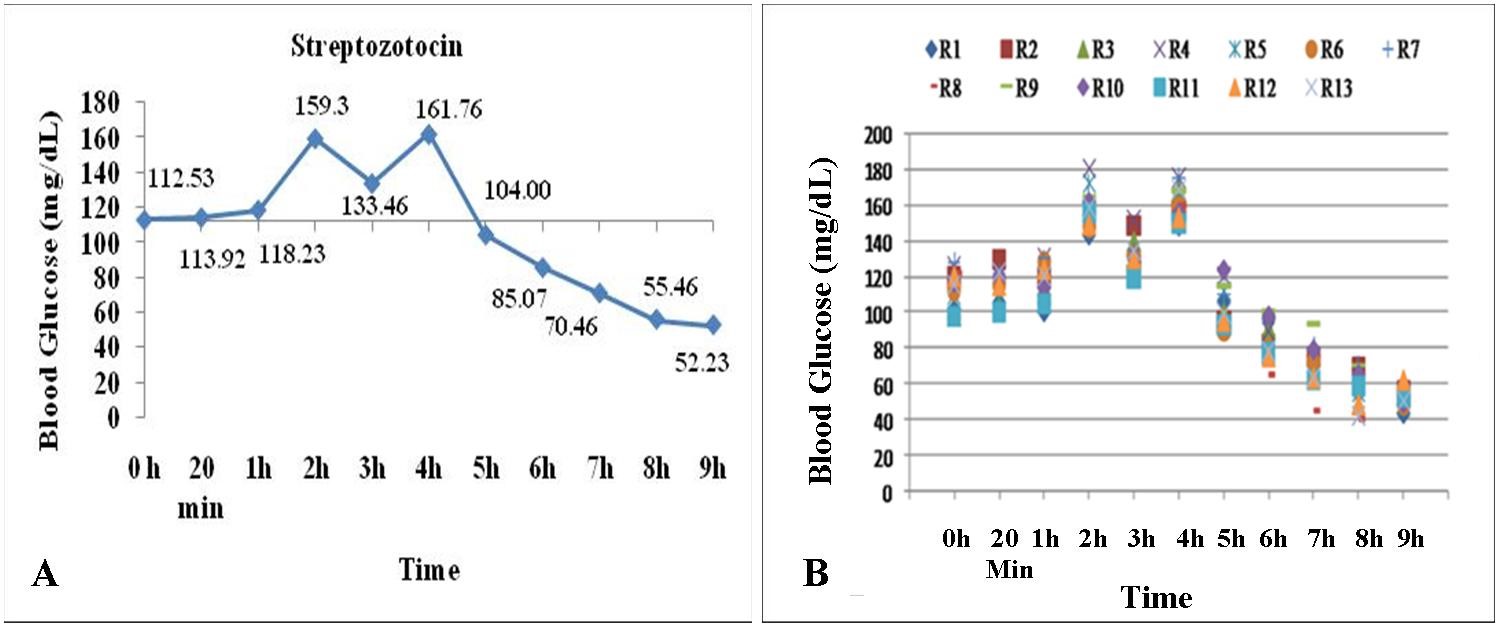
Fig.1: General (A) and individual (B) trend of immediate changes in blood glucose levels of rabbits following administration of single intravenous dose of streptozotocin @ 65 mg/kg b.w
The rabbits were normal up to first five hours. Mild hyperaesthesia was noted at 5 to 6 h followed by decreased activity characterized by lethargy and dullness. At this stage, blood glucose levels ranged from 70 to 90 mg/dL. Later rabbits appeared more apprehensive with upright ears, and dashed away when approached or touched (Fig. 2). At this stage blood glucose ranged from 50 to 70 mg/dL. At 9 h post-treatment rabbits showed signs of muscular weakness, sitting quietly with their head turned slightly to one side (Fig. 3). After intravenous glucose therapy rabbits showed rapid recovery and the signs disappeared completely after 24 hours post-treatment.
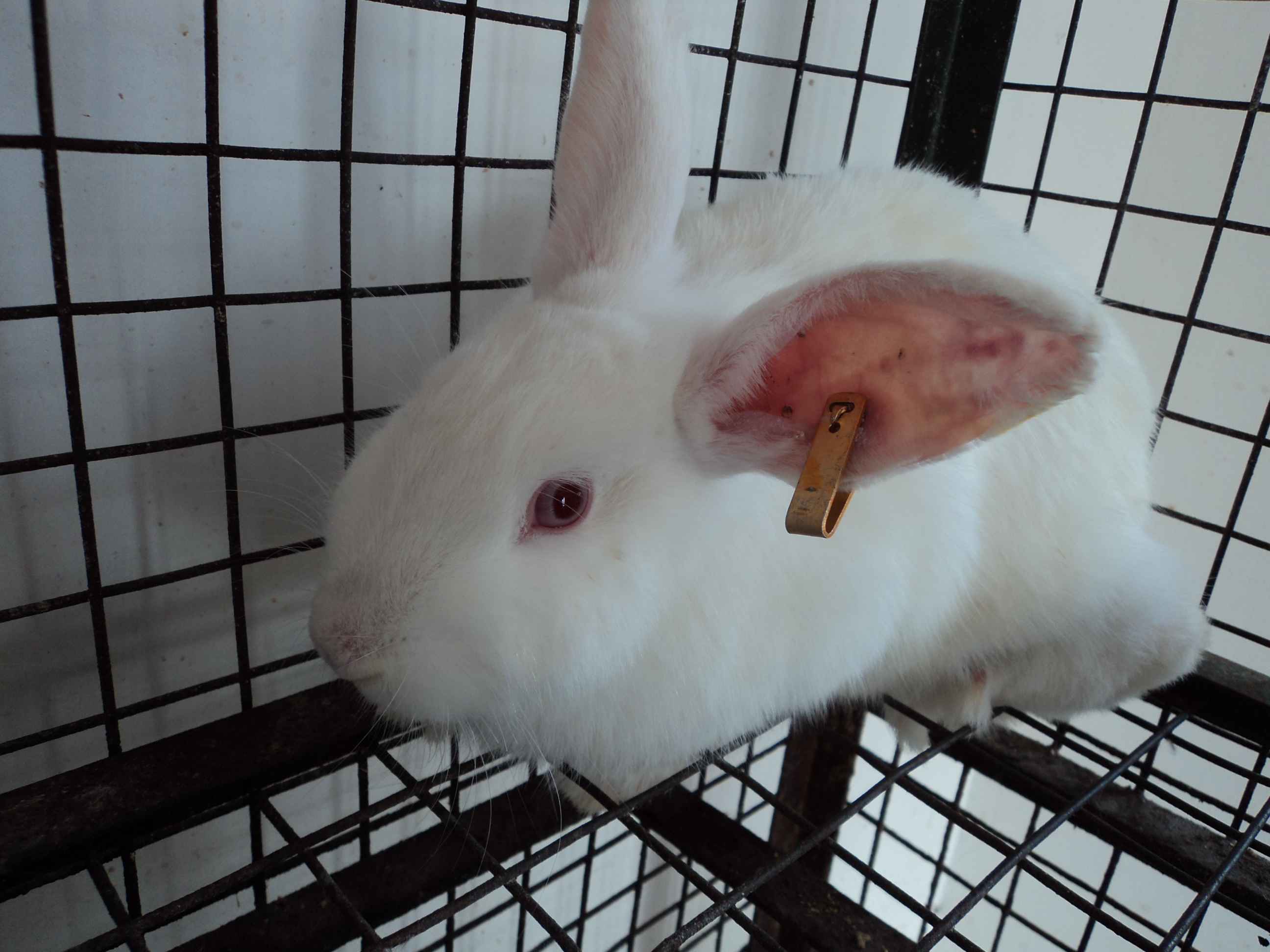
Fig.2: Rabbit following administration of single intravenous dose of streptozotocin @65 mg/kg-body weight (bw) appearing apprehensive with upright ears
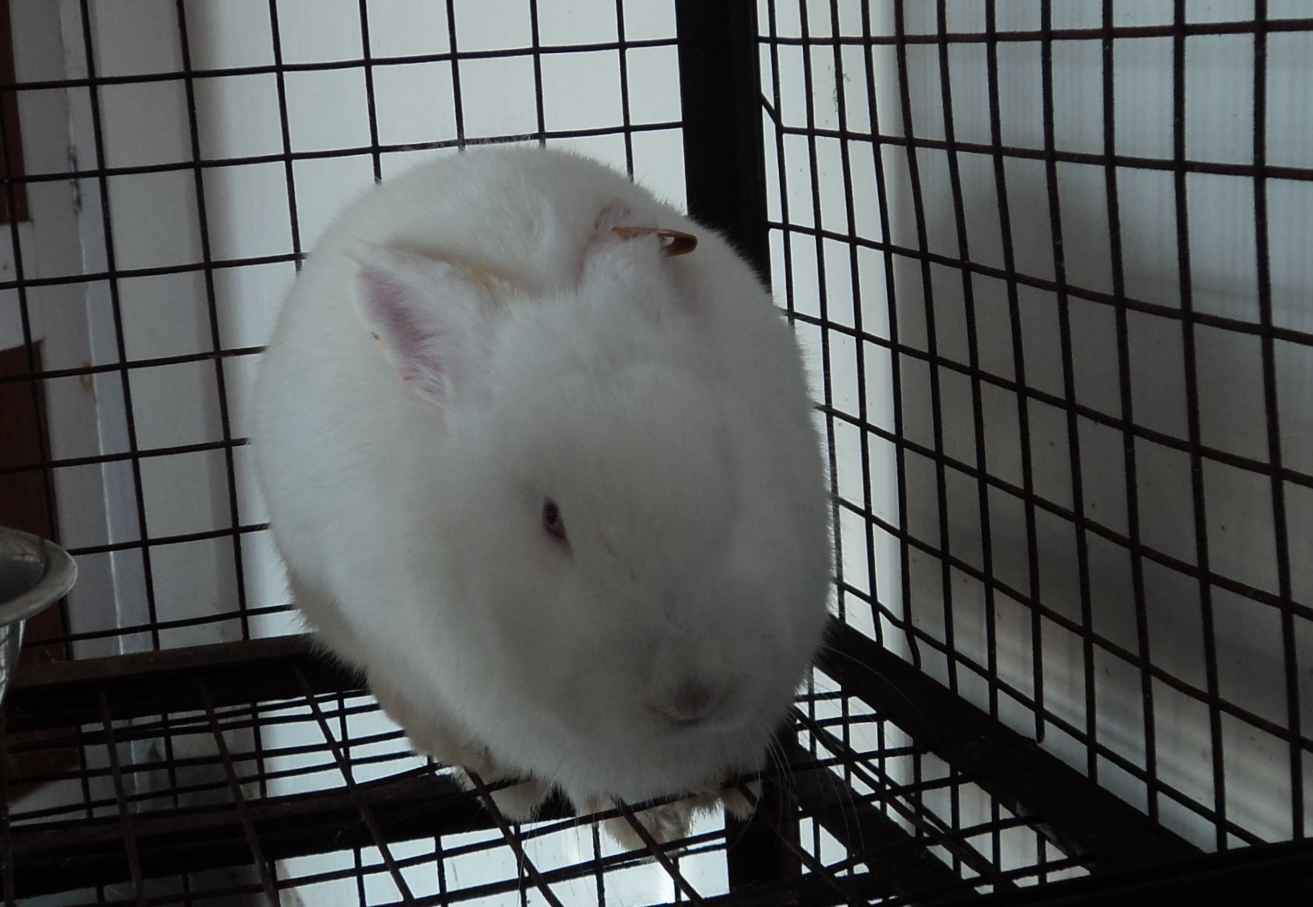
Fig.3: Rabbit following administration of single intravenous dose of streptozotocin @65 mg/kg-body weight (bw) sitting quietly with their head turned slightly to one side
Discussion
STZ administered to rabbits @ 65 mg/kg-body weight (bw) as single intravenous dose caused immediate hyperglycaemia followed by sustained hypoglycaemia warranting glucose therapy by 9 h. Similar pattern of early changes in glucose levels following administration of diabetogenic doses of STZ have been reported in rats (13). In rats, hyperglycaemia with a concomitant drop in blood insulin has been reported two hours after STZ injection followed by hypoglycemia with high levels of blood insulin about six hours later. In the present study although, rabbits showed individual variation, hyperglycaemia was noted 2-4 hours post-STZ administration with a slight dip at 3 hours post-treatment. After 4 h post-treatment, progressive decrease in blood glucose levels was recorded with overt hypoglycaemia appearing at 7 hours post treatment.
The early hyperglycaemic response may be ascribed to STZ induced impaired glucose oxidation (14) causing depletion of NAD+ which results in an inhibition of insulin biosynthesis and secretion (15). STZ, following uptake into β-cells via GLUT2 receptors (16), causes dysfunction of mitochondrial enzymes (17) and damage to the mitochondrial genome (18) abolishing insulin secretion response of β-cell to glucose and amino acids (19). STZ methylates proteins (20), which contributes to the functional defects of the β-cells after exposure to STZ.
Hypoglycaemia observed after the initial hyperglycaemia may be ascribed to temporary return of β-cell responsiveness to glucose, followed by STZ induced beta-cytolysis (21). STZ causes DNA alkylation (16), protein glycosylation (22), and produce RNS and ROS (23, 24), resulting in beta-cytotoxicity and apoptosis (25, 26). The hyperglycaemia induced insulin secretion by β-cells as well as release of insulin following beta-cytolysis results in hyperinsulinaemia. The negative paracrine effects of high insulin levels within the islet on α-cells (27, 28) associated with hyperinsulinaemia induced CNS mediated negative regulation of glucagon, epinephrine, norepinephrine and cortisol (29, 30) results in the progressive and marked hypoglycaemia following the transient hyperglycaemic state. In addition, insulin acts on the hypothalamus to regulate hepatic glucose production (31) further favoring development of hypoglycaemia (4).
All rabbits showed similar pattern of glucose response albeit individual variation in degree of response was noted. Individual difference in glycaemic response in rabbits has also been observed following alloxan induced beta-cytolysis (32). The blood glucose levels observed in different rabbits at any point in time from 5 hours post-treatment revealed a wider range. This may partly be attributed to the fact that rabbits of either sex were used. Difference concerning STZ induced ROS production in male and female has been reported in mice (33).
The nature and progression clinical signs corresponded to the degree of hypoglycaemia (32). High sensitivity to altered glycaemic status has been noted among normoglycaemic human subjects. Suppression of endogenous insulin secretion has been noted when blood glucose levels fall below 80 mg/dL whereas the levels below 70 mg/dL induce glucagon and epinephrine secretion (29, 32). In case of STZ induced hypoglycaemia, insulin is principally released following bata-cell lysis (2) and hence feedback response is compromised. This may be further accentuated by GLUT2 mediated direct hepatotoxic and nephrotoxic effects of STZ (7, 34, 35) leading to progressive hypoglycaemia. The individual variations observed in the degree and progression of hypoglycaemia may be attributed partially to the inherent differences in anti-oxidant levels and counter-regulatory process (32).
The progression behavioral changes were consistent with the glycaemic status reflecting progressive hypoglycaemia, in congruence with the observations in human, rabbits and other animals (29, 32, 36, 37). Hypoglycemia-associated social withdrawal and anhedonia in mice have been observed to be dependent on catecholamines (norepinephrine and epinephrine), in an adrenergic receptor-mediated manner (36). The signs noted in rabbits may be ascribed to neuroglycopaenia, evolving as a direct result of CNS neuronal glucose deprivation (32, 38, 39) causing impairment of several psychomotor functions (40). The sensitivity of CNS to glycaemic changes may be ascribed to its limited glycogen stores, inability to synthesize glucose and CNS glucose levels below that in systemic circulation albeit constant energy requirements (32). During hypoglycaemia, glucose levels in brain interstitial fluid may fall as low as ~25% of plasma glucose levels (41) that may be critical in the areas of brain with increased activity (29).
The observed progressive muscular weakness may be attributed to development of hypoglycaemic state. This is further supported by the fact that intravenous infusion of dextrose resulted in prompt recovery (32). Hypoglycaemia causes sympathetic activation stimulating release of epinephrine which increases peripheral muscle insulin resistance through decreased intrinsic activity of GLUT4 glucose transporters at the cell membrane (42) and increased muscle glycogenolysis and intracellular glucose-6-phosphate, which inhibits cellular glucose transport (43) despite marked increase in blood flow and decreased vascular resistance (44). The exhaustion of the reserves might lead to progressive development of fatigue. However, the immediate positive response to glucose therapy is suggestive of hypoglycaemia induced-CNS mediated fatigue (32). Immediate recovery from hypoglycaemic fatigue has been reported following intravenous administration of glucose (32, 45).
Conclusion
STZ induced a characteristic multiphasic immediate response in rabbits similar to one reported in other rodents. Behavioral changes were characteristic of hypoglycaemia warranting early management in order to avoid fatalities. In addition, marked individual variations in response exist in terms of onset and severity of glycaemic changes. As such, for undertaking any such studies using rabbit models, sex of the subjects should be defined.
Acknowledgment
The author would like to acknowledge staff members of the laboratory and animal house for their assistance. Financial support was obtained from Directorate of Research SKUAST-K.
Conflict of interest
All authors declare that there is no conflict of interests.
How to cite this article:
Saleem Mir M, Maqbool Darzi M, Baba OK, Musadiq Khan H, Ahmad Kamil S, Sofi AH, et al. Streptozotocin Induced Acute Clinical Effectsin Rabbits (Oryctolagus cuniculus). Iran J Pathol. 2015;10(3):206-13.
| Article View | 3,116 |
| PDF Download | 1,479 |
